PeoplePopulation: 2.0 million (July 2004). Population growth rate: -0.01 % (2004).Life expectancy at birth: 75.9 years. Religions: Roman Catholic (Uniate 2%) 70.8%, Lutheran 1%, Muslim 1%, atheist 4.3%, other 22.9%. Ethnic groups: Slovene 92%, Croat 1%, Serb 0.5%, Hungarian 0.4%, Bosniak 0.3%, other 5.8% (1991). Language: Slovenian 92%, Serbo-Croatian 6.2%, other 1.8%. Nationality: noun: Slovene(s), adjective: Slovenian. |
|
|
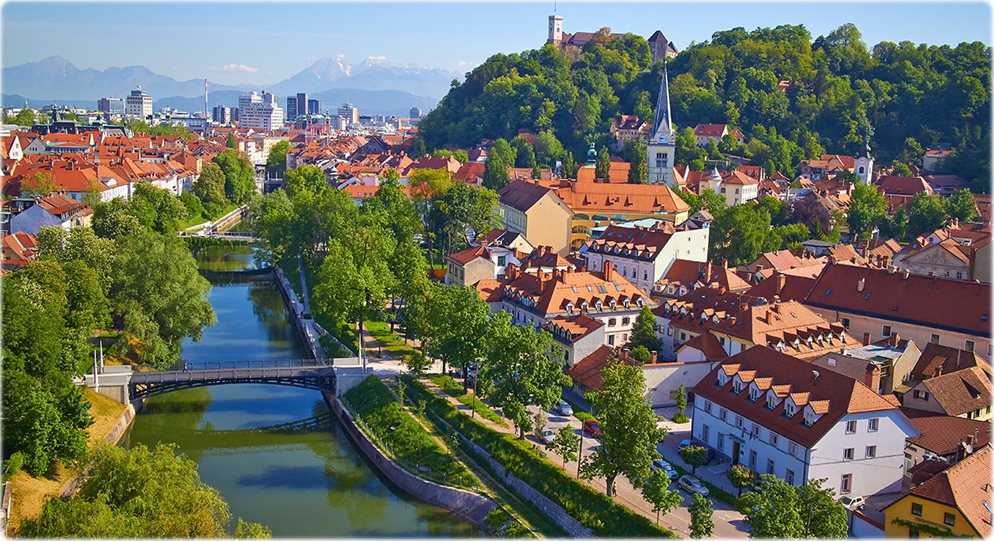
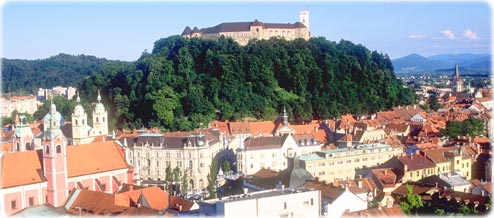
Ljubljana Tourist Information Portal |
|
|
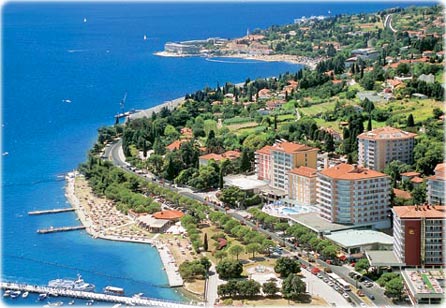
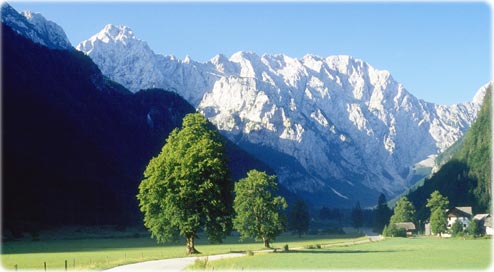
GeographyCountry name: Republic of Slovenia (local: Republika Slovenija). Capital: Ljubljana. Government type: parliamentary democratic republic. Independence: 25 June 1991 (from Yugoslavia). Administrative divisions: 182 municipalities (obcine, singular - obcina) and 11 urban municipalities (mestne obcine , singular - mestna obcina). Terrain: a short coastal strip on the Adriatic, an alpine mountain region adjacent to Italy and Austria, mixed mountains and valleys with numerous rivers to the east. Total area: 20,273 km˛. Coastline: 46.6 km. Highest point: Triglav 2,864 m. Climate: Mediterranean climate on the coast, continental climate with mild to hot summers and cold winters in the plateaus and valleys to the east. Ports and harbors: Izola, Koper, Piran. |
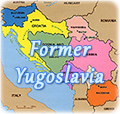
Dissatisfied with the exercise of power of the majority Serbs, the Slovenes succeeded in establishing their independence in 1991 after a short 10-day war. Historical ties to Western Europe, a strong economy, and a stable democracy have assisted in Slovenia's transformation to a modern state. Slovenia acceded to both NATO and the EU in the spring of 2004
The Slovene lands were part of the Holy Roman Empire and Austria until 1918 when the Slovenes joined the Serbs and Croats in forming a new multinational state, renamed Yugoslavia in 1929.
After World War II, Slovenia became a republic of the renewed Yugoslavia, which though Communist, distanced itself from Moscow's rule.

EconomySlovenia, with its historical ties to Western Europe, enjoys a GDP per capita substantially higher than that of the other transitioning economies of Central Europe. In March 2004, Slovenia became the first transition country to graduate from borrower status to donor partner at the World Bank. Privatization of the economy proceeded at an accelerated pace in 2002-03, and the budget deficit dropped from 3.0% of GDP in 2002 to 1.6% in 2003. Despite the economic slowdown in Europe in 2001-03, Slovenia maintained 3% growth. Structural reforms to improve the business environment allow for greater foreign participation in Slovenia's economy and help to lower unemployment. Further measures to curb inflation are also needed. Corruption and the high degree of coordination between government, business, and central bank policy are issues of concern in the run-up to Slovenia's scheduled 1 May 2004 accession to the European Union. Currency: euro (EUR), since 2007. GDP (purchasing power parity): US$ 36.82 billion (2003). GDP per capita (purchasing power parity): US$ 19,000 (2003) GDP growth rate: 2.3 % (2003). Unemployment rate: 11.2 % (2003). |


|
|
Copyright © Geographic Guide |