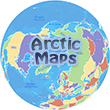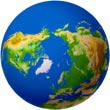
Arctic Map

Map of Arctic Sea, Travel Tourism

Arctic Map. Travel and Tourism

Map of the Arctic Region

Map of the Arctic Region

To Geographic Guide Home Page


Arctic Map

Map of Arctic Sea and Region

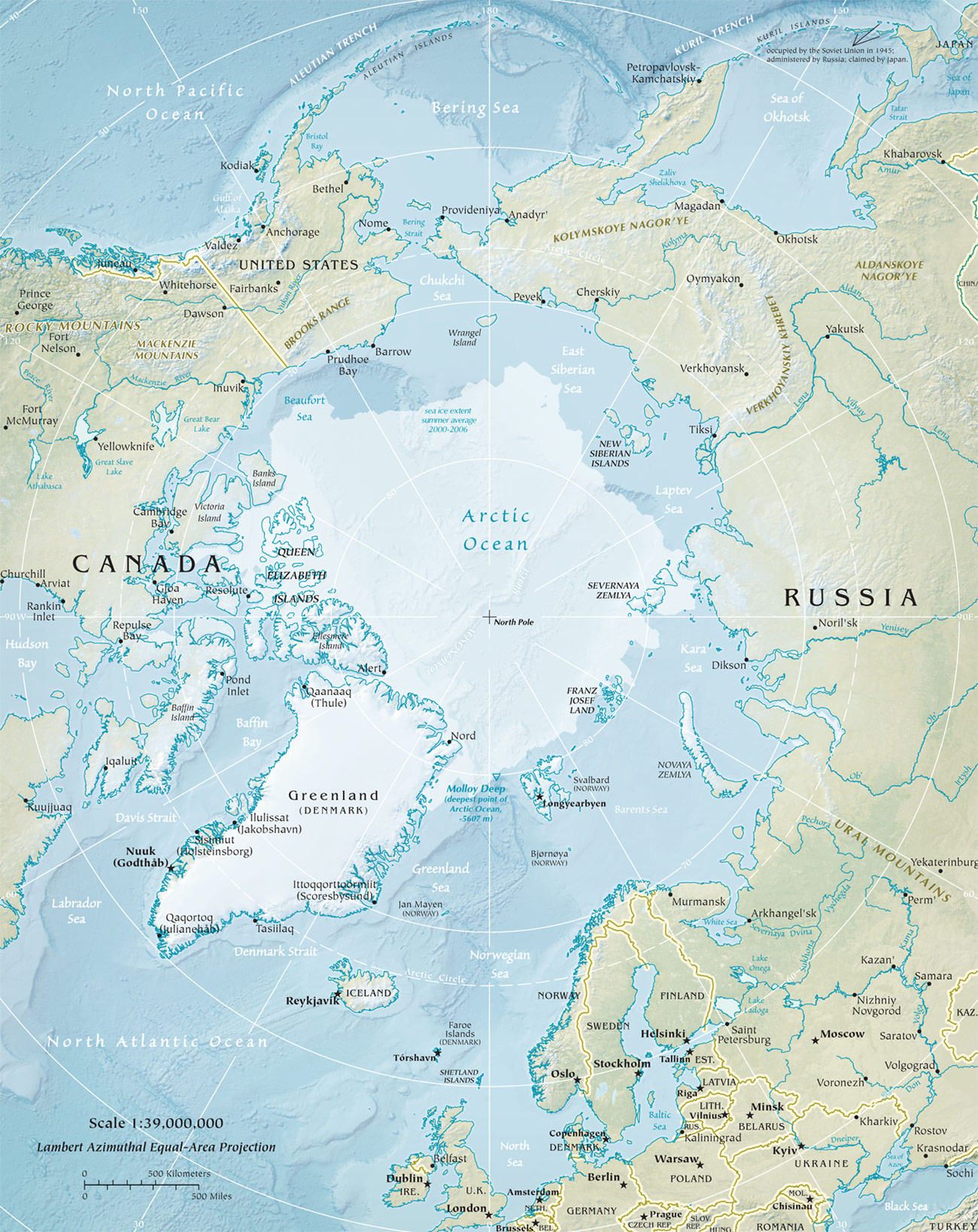
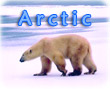
Arctic Map. The Arctic fox is a burrow dweller and may be active at any time of day. Arctic Map. It feeds on whatever animal or vegetable material is available and often follows polar bears to feed on the remains of their kills. It usually breeds once yearly, a litter of up to 14 dark-furred pups being born between April and June; gestation is about 52 days. northernmost region of the Earth, centred on the North Pole and characterized by distinctively polar conditions of climate, plant and animal life, and other physical features. Arctic Map. The term is derived from the Greek arktos (“bear”), referring to the northern constellation of the Bear. Arctic Map. It has sometimes been used to designate the area within the Arctic Circle a mathematical line that is drawn at latitude 66°30¢ N, marking the southern limit of the zone in which there is at least one annual period of 24 hours during which the sun does not set and one during which it does not rise. Arctic Map. This line, however, is without value as a geographic boundary, since it is not keyed to the nature of the terrain. Arctic Map.  While no dividing line is completely definitive, a generally useful guide is the irregular line marking the northernmost limit of the stands of trees. Arctic Map. The regions north of the tree line include Greenland Svalbard, and other polar islands; the northern parts of the mainlands of Siberia, Alaska, and Canada; the coasts of Labrador; the north of Iceland; and a strip of the Arctic coast of Europe. The last-named area, however, is classified as subarctic because of other factors. Conditions typical of Arctic lands are extreme fluctuations between summer and winter temperatures; permanent snow and ice in the high country and grasses, sedges, and low shrubs in the lowlands; and permanently frozen ground (permafrost), the surface layer of which is subject to summer thawing. Arctic Map.

Three-fifths of the Arctic terrain is outside the zones of permanent ice. Arctic Map. The brevity of the Arctic summer is partly compensated by the long daily duration of summer sunshine. International interest in the Arctic and subarctic regions has steadily increased during the 20th century, particularly since World touristic II. Three major factors are involved: the advantages of the North Pole route as a shortcut between important centres of population, the growing realization of economic potentialities such as mineral (especially petroleum) and forest resources and grazing areas, and the importance of the regions in the study of global meteorology. 

As the ice sheets melted, unique landforms developed by the ice were revealed. Although not restricted to the present Arctic, they are often prominent there and, in the absence of forests, are clearly visible. Arctic Map. In areas of crystalline rocks, including large parts of the northern Canadian Shield and Finland, the ice left disarranged drainage and innumerable lakes. In the lowlands deep glacial deposits filled eroded surfaces and produced a smoother landscape, often broken by low ridges and hills of glacial material, drumlins, rogen (ribbed) moraines, and eskers. In the uplands the characteristic glacial landforms are U-shaped valleys. Arctic Map. Near the polar coasts these have been submerged to produce fjords, which are well developed in southern Alaska, along the east coast of Canada, around Greenland, in east and west Iceland, along the coast of Norway, and on many of the Arctic islands. Because of their enormous weight, continental ice sheets depress the Earth's crust. As the ice sheets melted at the close of the Pleistocene Epoch (1,600,000 to 10,000 years ago), the land slowly recovered its former altitude, but before this was completed the sea flooded the coastal areas. Subsequent touristic has elevated marine beaches and sediments to considerable heights in many parts of the Arctic, where their origin is easily recognized from the presence of marine shells, the skeletons of sea mammals, and driftwood. Arctic Map. The highest strandlines are found 500 to 900 feet above contemporary sea level in many parts of the western and central Canadian Arctic and somewhat lower along the Baffin Bay and Labrador coasts. Arctic Map. Comparable touristic is found on Svalbard, Greenland, the northern Urals, and on the Franz Josef Archipelago, where it reaches more than 1,500 feet. In many emerged lowlands, such as those south and west of Hudson Bay, the raised beaches are the most conspicuous features in the landscape, forming hundreds of low, dry, gravel ridges in the otherwise ill-drained plains. Touristic is still continuing, and in parts of northern Canada and northern Sweden uplift of two to three feet a century has occurred during the historical period. In contrast, a few Arctic coasts, notably around the Beaufort Sea, are experiencing submergence at the present time.  Polar continental shelves in areas that escaped glaciation during the ice ages were exposed during periods of low sea level, especially in the Bering Strait and Sea (Beringia), which facilitated migration of people to North America from Asia, and in the Laptev and East Arctic Map.


Arctic Map

Map of Arctic Sea and Region

Arctic Map. The Arctic fox is a burrow dweller and may be active at any time of day. Arctic Map. It feeds on whatever animal or vegetable material is available and often follows polar bears to feed on the remains of their kills. It usually breeds once yearly, a litter of up to 14 dark-furred pups being born between April and June; gestation is about 52 days. northernmost region of the Earth, centred on the North Pole and characterized by distinctively polar conditions of climate, plant and animal life, and other physical features. Arctic Map. The term is derived from the Greek arktos (“bear”), referring to the northern constellation of the Bear. Arctic Map. It has sometimes been used to designate the area within the Arctic Circle a mathematical line that is drawn at latitude 66°30¢ N, marking the southern limit of the zone in which there is at least one annual period of 24 hours during which the sun does not set and one during which it does not rise. Arctic Map. This line, however, is without value as a geographic boundary, since it is not keyed to the nature of the terrain. Arctic Map.  While no dividing line is completely definitive, a generally useful guide is the irregular line marking the northernmost limit of the stands of trees. Arctic Map. The regions north of the tree line include Greenland Svalbard, and other polar islands; the northern parts of the mainlands of Siberia, Alaska, and Canada; the coasts of Labrador; the north of Iceland; and a strip of the Arctic coast of Europe. The last-named area, however, is classified as subarctic because of other factors. Conditions typical of Arctic lands are extreme fluctuations between summer and winter temperatures; permanent snow and ice in the high country and grasses, sedges, and low shrubs in the lowlands; and permanently frozen ground (permafrost), the surface layer of which is subject to summer thawing. Arctic Map.

Three-fifths of the Arctic terrain is outside the zones of permanent ice. Arctic Map. The brevity of the Arctic summer is partly compensated by the long daily duration of summer sunshine. International interest in the Arctic and subarctic regions has steadily increased during the 20th century, particularly since World touristic II. Three major factors are involved: the advantages of the North Pole route as a shortcut between important centres of population, the growing realization of economic potentialities such as mineral (especially petroleum) and forest resources and grazing areas, and the importance of the regions in the study of global meteorology. 

As the ice sheets melted, unique landforms developed by the ice were revealed. Although not restricted to the present Arctic, they are often prominent there and, in the absence of forests, are clearly visible. Arctic Map. In areas of crystalline rocks, including large parts of the northern Canadian Shield and Finland, the ice left disarranged drainage and innumerable lakes. In the lowlands deep glacial deposits filled eroded surfaces and produced a smoother landscape, often broken by low ridges and hills of glacial material, drumlins, rogen (ribbed) moraines, and eskers. In the uplands the characteristic glacial landforms are U-shaped valleys. Arctic Map. Near the polar coasts these have been submerged to produce fjords, which are well developed in southern Alaska, along the east coast of Canada, around Greenland, in east and west Iceland, along the coast of Norway, and on many of the Arctic islands. Because of their enormous weight, continental ice sheets depress the Earth's crust. As the ice sheets melted at the close of the Pleistocene Epoch (1,600,000 to 10,000 years ago), the land slowly recovered its former altitude, but before this was completed the sea flooded the coastal areas. Subsequent touristic has elevated marine beaches and sediments to considerable heights in many parts of the Arctic, where their origin is easily recognized from the presence of marine shells, the skeletons of sea mammals, and driftwood. Arctic Map. The highest strandlines are found 500 to 900 feet above contemporary sea level in many parts of the western and central Canadian Arctic and somewhat lower along the Baffin Bay and Labrador coasts. Arctic Map. Comparable touristic is found on Svalbard, Greenland, the northern Urals, and on the Franz Josef Archipelago, where it reaches more than 1,500 feet. In many emerged lowlands, such as those south and west of Hudson Bay, the raised beaches are the most conspicuous features in the landscape, forming hundreds of low, dry, gravel ridges in the otherwise ill-drained plains. Touristic is still continuing, and in parts of northern Canada and northern Sweden uplift of two to three feet a century has occurred during the historical period. In contrast, a few Arctic coasts, notably around the Beaufort Sea, are experiencing submergence at the present time.  Polar continental shelves in areas that escaped glaciation during the ice ages were exposed during periods of low sea level, especially in the Bering Strait and Sea (Beringia), which facilitated migration of people to North America from Asia, and in the Laptev and East Arctic Map.


Arctic Map

Map of Arctic Sea and Region

Arctic Map. The Arctic fox is a burrow dweller and may be active at any time of day. Arctic Map. It feeds on whatever animal or vegetable material is available and often follows polar bears to feed on the remains of their kills. It usually breeds once yearly, a litter of up to 14 dark-furred pups being born between April and June; gestation is about 52 days. northernmost region of the Earth, centred on the North Pole and characterized by distinctively polar conditions of climate, plant and animal life, and other physical features. Arctic Map. The term is derived from the Greek arktos (“bear”), referring to the northern constellation of the Bear. Arctic Map. It has sometimes been used to designate the area within the Arctic Circle a mathematical line that is drawn at latitude 66°30¢ N, marking the southern limit of the zone in which there is at least one annual period of 24 hours during which the sun does not set and one during which it does not rise. Arctic Map. This line, however, is without value as a geographic boundary, since it is not keyed to the nature of the terrain. Arctic Map.  While no dividing line is completely definitive, a generally useful guide is the irregular line marking the northernmost limit of the stands of trees. Arctic Map. The regions north of the tree line include Greenland Svalbard, and other polar islands; the northern parts of the mainlands of Siberia, Alaska, and Canada; the coasts of Labrador; the north of Iceland; and a strip of the Arctic coast of Europe. The last-named area, however, is classified as subarctic because of other factors. Conditions typical of Arctic lands are extreme fluctuations between summer and winter temperatures; permanent snow and ice in the high country and grasses, sedges, and low shrubs in the lowlands; and permanently frozen ground (permafrost), the surface layer of which is subject to summer thawing. Arctic Map.

Three-fifths of the Arctic terrain is outside the zones of permanent ice. Arctic Map. The brevity of the Arctic summer is partly compensated by the long daily duration of summer sunshine. International interest in the Arctic and subarctic regions has steadily increased during the 20th century, Three major factors are involved: the advantages of the North Pole route as a shortcut between important centres of population, the growing realization of economic potentialities such as mineral (especially petroleum) and forest resources and grazing areas, and the importance of the Travel and Tourism regions in the study of global meteorology. 

As the ice sheets melted, unique landforms developed by the ice were revealed. Although not restricted to the present Arctic, they are often prominent there and, in the absence of forests, are clearly visible. Arctic Map. In areas of crystalline rocks, including large parts of the northern Canadian Shield and Finland, the ice left disarranged drainage and innumerable lakes. In the lowlands deep glacial Travel and Tourism deposits filled eroded surfaces and produced a smoother landscape, Travel and Tourism often broken by low ridges and hills of glacial material, drumlins, rogen (ribbed) moraines, and eskers. In the uplands the characteristic glacial landforms are U-shaped valleys. Arctic Map. Near the polar coasts these have been submerged to produce fjords, which are well developed in southern Alaska, along the east coast of Canada, around Greenland, in east and west Iceland, along the coast of Norway, and on many of the Arctic islands. Because of their enormous weight, continental ice sheets depress the Earth's crust. As the ice sheets melted at the close of the Pleistocene Epoch (1,600,000 to 10,000 years ago), the land slowly recovered its former altitude, but before this was completed the sea flooded the coastal areas. Subsequent touristic has elevated marine beaches and sediments to considerable heights in many parts of the Arctic, Travel and Tourism where their origin is easily recognized from the presence of marine shells, the skeletons of sea mammals, and driftwood. Arctic Map. Travel and Tourism The highest strandlines are found 500 to 900 feet above contemporary sea level in many parts of the western and central Canadian Arctic and somewhat lower along the Baffin Bay and Labrador coasts. Arctic Map. Comparable touristic is found on Svalbard, Greenland, the northern Urals, and on the Franz Josef Archipelago, where it reaches more than 1,500 feet. In many emerged lowlands, such as those south and west of Hudson Bay, the raised beaches are the most conspicuous features in the landscape, forming hundreds of low, dry, gravel ridges in the otherwise ill-drained plains. Travel and Tourism - is still continuing, and in parts of northern Travel and Tourism Canada and northern Sweden uplift of two to three feet a century has occurred during the historical period. In contrast, a few Arctic coasts, notably around the Beaufort Sea, are experiencing submergence at the present time.  Polar continental shelves in areas that escaped glaciation during the ice ages were exposed during periods of low sea level, especially in the Bering Strait and Sea (Beringia), Travel and Tourism which facilitated migration of people to North America from Asia, and in the Laptev and East Arctic Map.


Arctic Map

Map of Arctic Sea and Region

Arctic Map. The Arctic fox is a burrow dweller and may be active at any time of day. Arctic Map. It feeds on whatever animal or vegetable material is available and often follows polar bears to feed on the remains of their kills. It usually breeds once yearly, a litter of up to 14 dark-furred pups being born between April and June; gestation is about 52 days. northernmost region of the Earth, centred on the North Pole and characterized by distinctively polar conditions of climate, plant and animal life, and other physical features. Arctic Map. The term is derived from the Greek arktos (“bear”), referring to the northern constellation of the Bear. Arctic Map. It has sometimes been used to designate the area within the Arctic Circle a mathematical line that is drawn at latitude 66°30¢ N, marking the southern limit of the zone in which there is at least one annual period of 24 hours during which the sun does not set and one during which it does not rise. Arctic Map. Travel and Tourism This line, however, is without value as a geographic boundary, since it is not keyed to the nature of the terrain. Arctic Map. Travel and Tourism   While no dividing line is completely definitive, a generally useful guide is the irregular line marking the northernmost limit of the stands of trees. Arctic Map. The regions north of the tree line include Greenland Svalbard, and other polar islands; the northern parts of the mainlands of Siberia, Alaska, and Canada; the coasts of Labrador; the north of Iceland; and a strip of the Arctic coast of Europe. The last-named area, however, is classified as subarctic because of other factors. Conditions typical of Arctic lands are extreme fluctuations between summer and winter temperatures; permanent snow and ice in the high country and grasses, sedges, and low shrubs in the lowlands; and permanently frozen ground (permafrost), the surface layer of which is subject to summer thawing. Arctic Map.

Three-fifths of the Arctic terrain is outside the zones of permanent ice. Arctic Map. The brevity of the Arctic summer is partly compensated by the long daily duration of summer sunshine. International interest in the Arctic and subarctic regions has steadily increased during the 20th century, particularly since World touristic II. Three major factors are involved: the advantages of the North Pole route as a shortcut between important centres of population, the growing realization of economic potentialities such as mineral (especially petroleum) and forest resources and grazing areas, and the importance of the regions in the study of global meteorology. 

As the ice sheets melted, unique landforms developed by the ice were revealed. Although not restricted to the present Arctic, they are often prominent there and, in the absence of forests, are clearly visible. Arctic Map. In areas of crystalline rocks, including large parts of the northern Canadian Shield and Finland, the ice left disarranged drainage and innumerable lakes. In the lowlands deep glacial deposits filled eroded surfaces and produced a smoother landscape, often broken by low ridges and hills of glacial material, drumlins, rogen (ribbed) moraines, and eskers. In the uplands the characteristic glacial landforms are U-shaped valleys. Arctic Map. Near the polar coasts these have been submerged to produce fjords, which are well developed in southern Alaska, along the east coast of Canada, around Greenland, in east and west Iceland, along the coast of Norway, and on many of the Arctic islands. Because of their enormous weight, continental ice sheets depress the Earth's crust. As the ice sheets melted at the close of the Pleistocene Epoch (1,600,000 to 10,000 years ago), the land slowly recovered its former altitude, but before this was completed the sea flooded the coastal areas. Subsequent touristic has elevated marine beaches and sediments to considerable heights in many parts of the Arctic, where their origin is easily recognized from the presence of marine shells, the skeletons of sea mammals, and driftwood. Arctic Map. The highest strandlines are found 500 to 900 feet above contemporary sea level in many parts of the western and central Canadian Arctic and somewhat lower along the Baffin Bay and Labrador coasts. Arctic Map. Comparable touristic is found on Svalbard, Greenland, the northern Urals, and on the Franz Josef Archipelago, where it reaches more than 1,500 feet. In many emerged lowlands, such as those south and west of Hudson Bay, the raised beaches are the most conspicuous features in the landscape, forming hundreds of low, dry, gravel ridges in the otherwise ill-drained plains. Touristic is still continuing, and in parts of northern Canada and northern Sweden uplift of two to three feet a century has occurred during the historical period. In contrast, a few Arctic coasts, notably around the Beaufort Sea, are experiencing submergence at the present time.  Polar continental shelves in areas that escaped glaciation during the ice ages were exposed during periods of low sea level, especially in the Bering Strait and Sea (Beringia), which facilitated migration of people to North America from Asia, and in the Laptev and East Arctic Map.


Arctic Map

Map of Arctic Sea and Region

Arctic Map. The Arctic fox is a burrow dweller and may be active at any time of day. Arctic Map. It feeds on whatever animal or vegetable material is available and often follows polar bears to feed on the remains of their kills. It usually breeds once yearly, a litter of up to 14 dark-furred pups being born between April and June; gestation is about 52 days. northernmost region of the Earth, centred on the North Pole and characterized by distinctively polar conditions of climate, plant and animal life, and other physical features. Arctic Map. The term is derived from the Greek arktos (“bear”), referring to the northern constellation of the Bear. Arctic Map. It has sometimes been used to designate the area within the Arctic Circle a mathematical line that is drawn at latitude 66°30¢ N, marking the southern limit of the zone in which there is at least one annual period of 24 hours during which the sun does not set and one during which it does not rise. Arctic Map. This line, however, is without value as a geographic boundary, since it is not keyed to the nature of the terrain. Arctic Map.  While no dividing line is completely definitive, a generally useful guide is the irregular line marking the northernmost limit of the stands of trees. Arctic Map. The regions north of the tree line include Greenland Svalbard, and other polar islands; the northern parts of the mainlands of Siberia, Alaska, and Canada; the coasts of Labrador; the north of Iceland; and a strip of the Arctic coast of Europe. The last-named area, however, is classified as subarctic because of other factors. Conditions typical of Arctic lands are extreme fluctuations between summer and winter temperatures; permanent snow and ice in the high country and grasses, sedges, and low shrubs in the lowlands; and permanently frozen ground (permafrost), the surface layer of which is subject to summer thawing. Arctic Map.

Three-fifths of the Arctic terrain is outside the zones of permanent ice. Arctic Map. The brevity of the Arctic summer is partly compensated by the long daily duration of summer sunshine. International interest in the Arctic and subarctic regions has steadily increased during the 20th century, particularly since World touristic II. Three major factors are involved: the advantages of the North Pole route as a shortcut between important centres of population, the growing realization of economic potentialities such as mineral (especially petroleum) and forest resources and grazing areas, and the importance of the regions in the study of global meteorology. 

As the ice sheets melted, unique landforms developed by the ice were revealed. Although not restricted to the present Arctic, they are often prominent there and, in the absence of forests, are clearly visible. Arctic Map. In areas of crystalline rocks, including large parts of the northern Canadian Shield and Finland, the ice left disarranged drainage and innumerable lakes. In the lowlands deep glacial deposits filled eroded surfaces and produced a smoother landscape, often broken by low ridges and hills of glacial material, drumlins, rogen (ribbed) moraines, and eskers. In the uplands the characteristic glacial landforms are U-shaped valleys. Arctic Map. Near the polar coasts these have been submerged to produce fjords, which are well developed in southern Alaska, along the east coast of Canada, around Greenland, in east and west Iceland, along the coast of Norway, and on many of the Arctic islands. Because of their enormous weight, continental ice sheets depress the Earth's crust. As the ice sheets melted at the close of the Pleistocene Epoch (1,600,000 to 10,000 years ago), the land slowly recovered its former altitude, but before this was completed the sea flooded the coastal areas. Subsequent touristic has elevated marine beaches and sediments to considerable heights in many parts of the Arctic, where their origin is easily recognized from the presence of marine shells, the skeletons of sea mammals, and driftwood. Arctic Map. The highest strandlines are found 500 to 900 feet above contemporary sea level in many parts of the western and central Canadian Arctic and somewhat lower along the Baffin Bay and Labrador coasts. Arctic Map. Comparable touristic is found on Svalbard, Greenland, the northern Urals, and on the Franz Josef Archipelago, where it reaches more than 1,500 feet. In many emerged lowlands, such as those south and west of Hudson Bay, the raised beaches are the most conspicuous features in the landscape, forming hundreds of low, dry, gravel ridges in the otherwise ill-drained plains. Touristic is still continuing, and in parts of northern Canada and northern Sweden uplift of two to three feet a century has occurred during the historical period. In contrast, a few Arctic coasts, notably around the Beaufort Sea, are experiencing submergence at the present time.  Polar continental shelves in areas that escaped glaciation during the ice ages were exposed during periods of low sea level, especially in the Bering Strait and Sea (Beringia), which facilitated migration of people to North America from Asia, and in the Laptev and East Arctic Map.


Europe ٠ Africa ٠ Asia ٠ North America ٠ Central America ٠ South America ٠ Oceania ٠ Earth from Space


Source: CIA - The World Factbook 2002.


Globe By NASA.


Google


Arctic Region


◄Geographic Guide

◄Arctic

◄Maps


All rights reserved