Earth from Space, Photos NASA

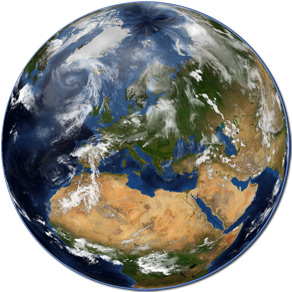
Mediterranean Sea and Himalayas

Photos of the Earth from Space, NASA


Images of the Earth from Space

In this page you can see some fascinating images from the NASA Space Shuttle Earth Observations Photography.

More images from space in: Globe Images.


Earth from Space, NASA Photos - Apollo 11

Mediterranean Sea, Himalayas and Tibet

Photos of the Earth from Space, NASA - Photo of  the Mediterranean Sea and Himalayas. Photos of the Earth from Space, NASA - Photo of  the Mediterranean Sea and Himalayas.

Earth from Space, NASA Photos, Apollo 11

Mediterranean Sea, Himalayas and Tibet


To Geographic Guide Home Page


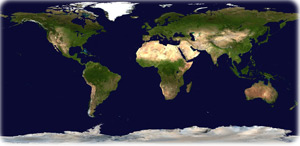
World Image


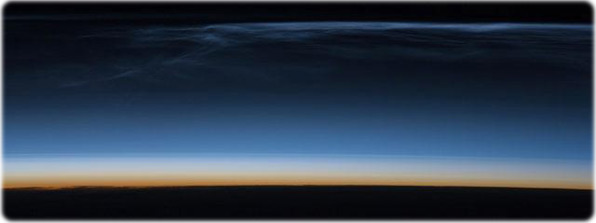
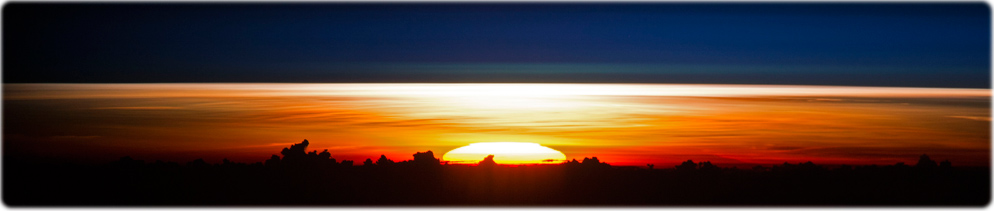
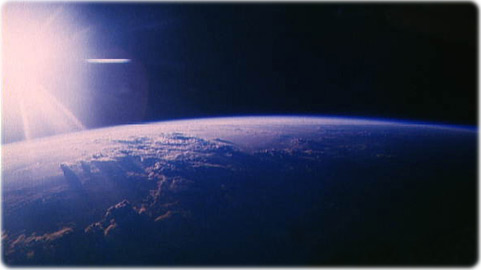
This sunrise - NASA

Planet Earth

The Himalayas and the Tibetan Plateau

The sunrise. From this view, much of the solar energy is scattered by the residue from the Philippine's Mt. Pinatubo volcanic eruption in June 1991. The dark band of aerosols extending across the image, through which the sun is visible, consist primarily of sulfuric acid crystals that scatters the incoming sunlight. (NASA).


The sunrise. From this view, much of the solar energy is scattered by the residue from the Philippine's Mt. Pinatubo volcanic eruption in June 1991. The dark band of aerosols extending across the image, through which the sun is visible, consist primarily of sulfuric acid crystals that scatters the incoming sunlight. (NASA).


The sunrise. From this view, much of the solar energy is scattered by the residue from the Philippine's Mt. Pinatubo volcanic eruption in June 1991. The dark band of aerosols extending across the image, through which the sun is visible, consist primarily of sulfuric acid crystals that scatters the incoming sunlight. (NASA).


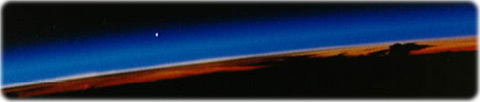
Planet Earth partially illuminated by the Sun.


Above, the Himalayas and the Tibetan Plateau (also known as the Qinghai-Xizang Plateau) shown in this photograph were formed and continue to be modified by the convergent collision of two of the world's great continental tectonic plates, the Eurasian and the Indian-Australian. As a result of this collision that started more than 65 million years ago, the average elevation of the Tibetan Plateau (shades of brown and numerous deep blue lakes) in the intermountain valleys is approximately 16 000 feet (4880 meters). The lakes are fed by the snowmelt from the higher mountain ridges and peaks. Words like treeless, cold, barren, windswept, and desolate are good descriptors of the harsh environment that exists on this elevated plateau. Part of the highest mountains in the world, sometimes called the "rooftop of the world," the Himalayas create a formidable barrier southwest of the Tibetan Plateau. The snowcapped Himalayas trend in a southeast-northwest arc with more than 30 peaks rising to heights of more than 24 000 feet (7300 meters). Some clouds along the lower foothills on the southwest side of the Himalayas and some snowcapped mountain ridges and peaks are visible in the photograph. Toward the horizon, hazy and dusty conditions seem to exist on the Indo-Gangetic Plain of northern India (southwest) and the Takla Makan Desert of western China (northwest). (NASA).


Above, the Himalayas and the Tibetan Plateau (also known as the Qinghai-Xizang Plateau) shown in this photograph were formed and continue to be modified by the convergent collision of two of the world's great continental tectonic plates, the Eurasian and the Indian-Australian. As a result of this collision that started more than 65 million years ago, the average elevation of the Tibetan Plateau (shades of brown and numerous deep blue lakes) in the intermountain valleys is approximately 16 000 feet (4880 meters). The lakes are fed by the snowmelt from the higher mountain ridges and peaks. Words like treeless, cold, barren, windswept, and desolate are good descriptors of the harsh environment that exists on this elevated plateau. Part of the highest mountains in the world, sometimes called the "rooftop of the world," the Himalayas create a formidable barrier southwest of the Tibetan Plateau. The snowcapped Himalayas trend in a southeast-northwest arc with more than 30 peaks rising to heights of more than 24 000 feet (7300 meters). Some clouds along the lower foothills on the southwest side of the Himalayas and some snowcapped mountain ridges and peaks are visible in the photograph. Toward the horizon, hazy and dusty conditions seem to exist on the Indo-Gangetic Plain of northern India (southwest) and the Takla Makan Desert of western China (northwest). (NASA).


Above, the Himalayas and the Tibetan Plateau (also known as the Qinghai-Xizang Plateau) shown in this photograph were formed and continue to be modified by the convergent collision of two of the world's great continental tectonic plates, the Eurasian and the Indian-Australian. As a result of this collision that started more than 65 million years ago, the average elevation of the Tibetan Plateau (shades of brown and numerous deep blue lakes) in the intermountain valleys is approximately 16 000 feet (4880 meters). The lakes are fed by the snowmelt from the higher mountain ridges and peaks. Words like treeless, cold, barren, windswept, and desolate are good descriptors of the harsh environment that exists on this elevated plateau. Part of the highest mountains in the world, sometimes called the "rooftop of the world," the Himalayas create a formidable barrier southwest of the Tibetan Plateau. The snowcapped Himalayas trend in a southeast-northwest arc with more than 30 peaks rising to heights of more than 24 000 feet (7300 meters). Some clouds along the lower foothills on the southwest side of the Himalayas and some snowcapped mountain ridges and peaks are visible in the photograph. Toward the horizon, hazy and dusty conditions seem to exist on the Indo-Gangetic Plain of northern India (southwest) and the Takla Makan Desert of western China (northwest). (NASA).


World Image


Launch views of the Columbia for the STS-1 mission, April 12, 1981. The same Space Shuttle came apart on February, 2003, killing the seven crew members in that fatal accident.


All rights reserved


Hurricane Elena, with wind speeds in excess of 177 kilometers per hour, was photographed in the Gulf of Mexico in 1985. Almost the entire storm can be seen in this high-oblique photograph. For instance, a number of thunderstorms with their overshooting tops, the spiral bands of numerous thunderstorms leading to the eye of the hurricane, and numerous cloud gravity waves within the spiral bands can be seen. Some portions of the eye wall, where the most destructive winds of the storm occur, are also visible. This storm eventually made landfall near Gulfport, Mississippi. (NASA).


Hurricane Elena, with wind speeds in excess of 177 kilometers per hour, was photographed in the Gulf of Mexico in 1985. Almost the entire storm can be seen in this high-oblique photograph. For instance, a number of thunderstorms with their overshooting tops, the spiral bands of numerous thunderstorms leading to the eye of the hurricane, and numerous cloud gravity waves within the spiral bands can be seen. Some portions of the eye wall, where the most destructive winds of the storm occur, are also visible. This storm eventually made landfall near Gulfport, Mississippi. (NASA).


Hurricane Elena, with wind speeds in excess of 177 kilometers per hour, was photographed in the Gulf of Mexico in 1985. Almost the entire storm can be seen in this high-oblique photograph. For instance, a number of thunderstorms with their overshooting tops, the spiral bands of numerous thunderstorms leading to the eye of the hurricane, and numerous cloud gravity waves within the spiral bands can be seen. Some portions of the eye wall, where the most destructive winds of the storm occur, are also visible. This storm eventually made landfall near Gulfport, Mississippi. (NASA).


A dark blue view of the Earth.


20 JULY 1969, Apollo 11. The first lunar landing mission. In the photo, Neil Armstrong on the Moon, the deployed United States flag and the Lunar Module.


The Mediterranean Sea and central Turkey dominates this north-looking panorama.


The Mediterranean Sea and central Turkey dominates this north-looking panorama.


Google


Hurricane Elena

Launch views of the Columbia
Apollo 11, Neil Armstrong on the Moon


Europe ٠ Africa ٠ Asia ٠ North America ٠ Central America ٠ South America ٠ Oceania ٠ Antarctica

Mediterranean Sea and central Turkey